
Materials for Energy
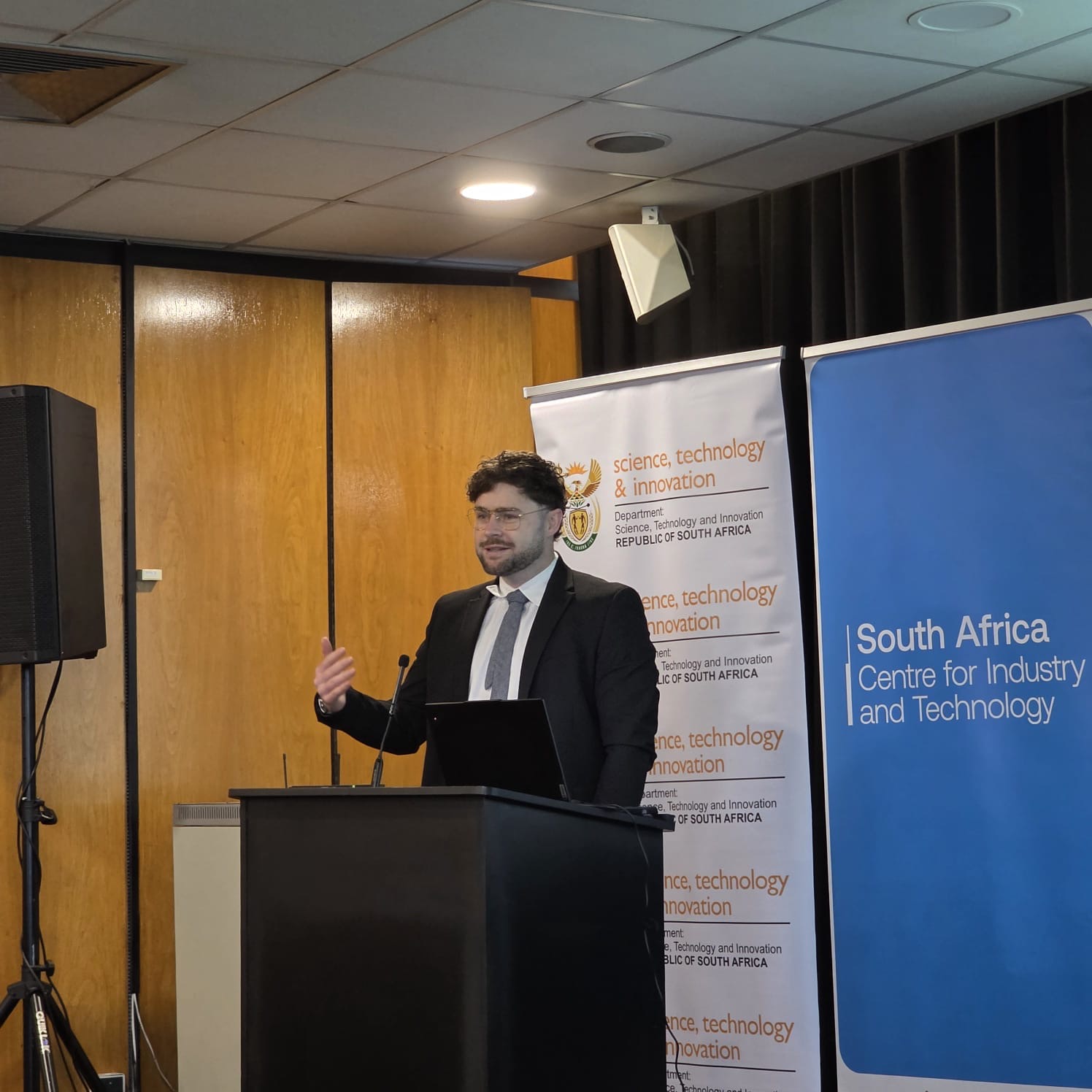 Prof Wesley Rosslyn-Smith, SACIT Director, addressing the audience
The question that framed the day was not "Do we align?" It was "What can we deliver together?" On 18 August 2026, SACIT and the Department of Science, Technology and Innovation (DSTI) hosted a workshop in Pretoria, bringing together their teams to turn shared ambitions into concrete projects. The goal: move beyond broad statements to identify initiatives with real-world impact.
“SACIT is a strategic asset that remains largely untapped, with the potential to drive innovation and industrialisation, open doors to global networks, and catalyse collaboration at home,” said Daan du Toit, DSTI Deputy Director-General.
The discussion then turned to how SACIT’s position within the World Economic Forum’s global C4IR network could help translate this potential into action. SACIT sits at a rare junction between South African innovation and international opportunity. “It is up to us to extract the value of the Forum,” said Prof Wesley Rosslyn-Smith, SACIT Director. The Centre aims to localise global initiatives for South Africa, amplify homegrown projects onto the world stage, and reinforce, rather than duplicate, what already works.
This connecting role provided a practical lens through which SACIT and DSTI could identify potential areas of collaboration.
The opportunities on the table
The day surfaced clear opportunities for collaboration. Two stood out: connecting South Africa’s Earth observation expertise to the World Economic Forum’s Future of Space Community and accelerating hydrogen initiatives to help the strongest projects find private investment and scale.
South Africa’s Earth observation capabilities are world-class, but moving from technical success to market impact requires global platforms. Likewise, hydrogen innovation needs fewer pilots and more acceleration to attract private capital and reach commercial scale.
Artificial intelligence also featured, with discussions on how to responsibly apply AI to national challenges. Across all topics, a single thread emerged: connecting science and technology more closely to industry and private-sector investment to drive real economic growth.
The potential for collaboration extends beyond South Africa’s borders. SACIT was invited to support South Africa’s SADC chairmanship, underscoring the importance of regional relationships and collaboration across Southern Africa. SACIT’s current work with the Special Economic Zones (SEZs) in South Africa through the Transitioning Industrial Clusters initiative (TIC) could be a key area for collaboration between SACIT and SADC.
The way forward
The next step is to translate the opportunities identified during the workshop into focused areas of joint action. By the end of the session, the message was clear: “This was not an information-sharing session but the bringing together of ideas. It’s now time for the rubber to hit the road.”
SACIT and DSTI will turn these conversations into a shortlist of co-designed projects, each with defined outcomes and private-sector partnerships. The aim is to build initiatives that deliver visible results and tell a compelling South African story on the world stage.